I’m sharing How To Make Your Own Mayonnaise and I’ll explain the precise mixing technique and ingredient ratios I rely on to produce a reliably emulsified, stable mayonnaise every time.
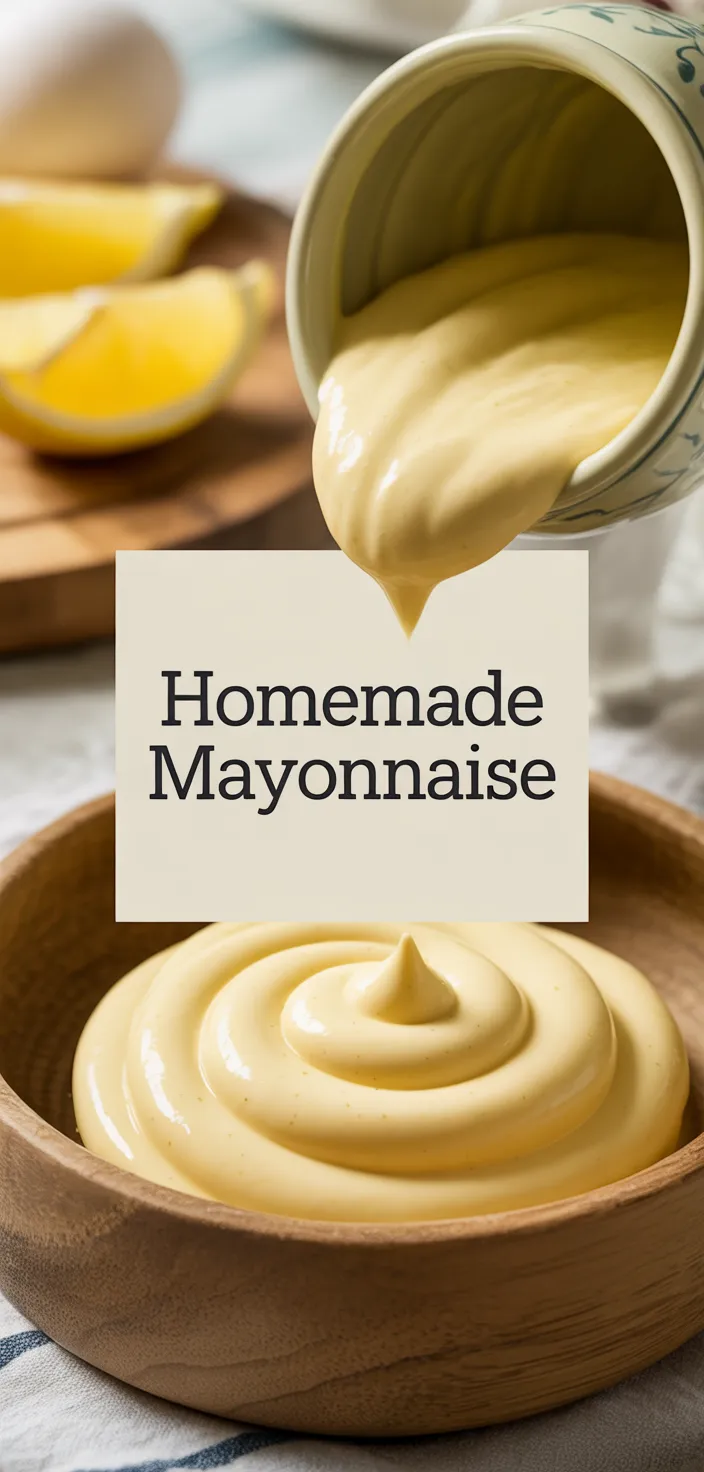
I’ve been making mayo for years and somehow people still act surprised when I serve it. This is the Best Homemade Mayonnaise Recipe I promise it’s weirdly simple but the results are creamy and thick every time.
The secret isnt a magic ingredient, its about the mixing and a couple of basics like egg yolk and Dijon mustard, plus knowing when to slow down. I messed it up a bunch before figuring tiny timing things out, so I get the frustration.
If you’re curious about How To Make Your Own Mayonnaise that actually beats store stuff, read on, you’ll see what changed everything.
Ingredients
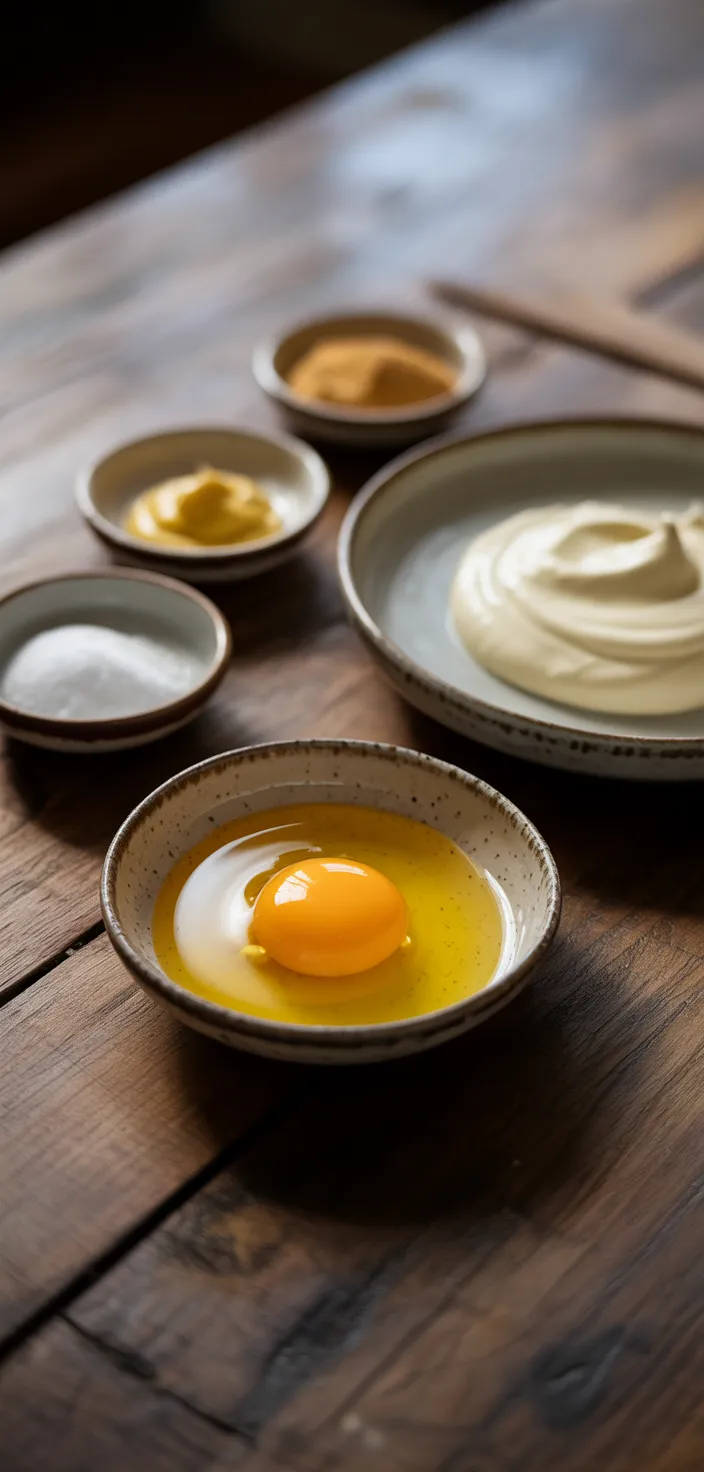
- Egg yolk: Rich in fat and lecithin, helps emulsify, gives a bit of protein and vitamins.
- Neutral oil: Pure calories, mostly unsaturated fats, no fiber, adds richness and mouthfeel.
- Dijon mustard: Adds tang and depth, tiny bit of protein, helps stabilize the emulsion.
- Lemon juice or vinegar: Bright acidic note, gives sourness and balance, small vitamin C boost.
- Sea salt: Enhances flavor, no real nutrients in large amounts, crucial for overall taste.
- Sugar (optional): Adds slight sweetness to cut acidity, mostly simple carbs, use sparingly.
- Black pepper (optional): Warm spicy note, no big nutrition, just rounds flavor and adds bite.
Ingredient Quantities
- 1 large egg yolk, room temperature (or 1 whole large egg if you prefer)
- 1 cup (240 ml) neutral oil like canola, vegetable or grapeseed oil
- 1 tablespoon Dijon mustard
- 1 tablespoon fresh lemon juice or white wine vinegar
- 1/2 teaspoon fine sea salt
- 1/4 teaspoon granulated sugar (optional)
- 1 to 2 teaspoons cold water (optional)
- Freshly ground black pepper to taste (optional)
How to Make this
1. Make sure the egg yolk (or whole egg if you prefer) is at room temperature, and measure out 1 cup (240 ml) neutral oil, 1 tbsp Dijon, 1 tbsp lemon juice or white wine vinegar, 1/2 tsp fine sea salt, and 1/4 tsp sugar if you want a touch of sweetness.
2. In a medium bowl whisk the yolk, Dijon, lemon juice (or vinegar), salt and sugar until smooth and slightly pale, it helps the emulsion start.
3. If whisking by hand: hold the bowl steady (a damp towel under it helps) and start adding the oil drop by drop while whisking vigorously, once it starts to thicken you can add the oil in a very thin steady stream until all is incorporated.
4. If using an immersion blender or regular blender/food processor: combine yolk, mustard, acid and salt in the jar, pour the oil on top, place the blender head on the bottom, turn it on and slowly lift as the emulsion forms, or with a blender add oil in a slow steady stream while blending.
5. Keep whisking/blending until the mayo is thick and creamy, taste and add a bit more lemon or salt if needed, add freshly ground black pepper to taste if you like.
6. If the mayo is too thick add 1 to 2 teaspoons cold water and whisk to loosen it, it’ll thin right out without ruining the texture.
7. If the mayo splits or breaks: whisk a fresh egg yolk in a clean bowl and slowly add the broken mayo into that yolk while whisking, or add a teaspoon of mustard and whisk to bring it back together.
8. Transfer to an airtight container, chill for at least 30 minutes for best flavor, and keep in the fridge up to about 1 week; use pasteurized eggs if you are worried about raw egg safety.
Equipment Needed
1. Medium mixing bowl, big enough to whisk without splashing
2. Whisk or fork for hand emulsifying
3. Measuring cup for the 1 cup oil and measuring spoons for the tablespoon and teaspoons
4. Immersion blender or regular blender or food processor, if youd rather blend than whisk
5. Rubber spatula to scrape down the sides and transfer the mayo
6. Small bowl or ramekin to whisk an extra yolk for rescuing a broken mayo
7. Damp kitchen towel to steady the bowl while whisking by hand
8. Airtight container or jar for chilling and storing the mayo
FAQ
HOMEMADE MAYONNAISE Recipe Substitutions and Variations
Quick swaps for homemade mayonnaise when youre out of an ingredient:
- Egg yolk: use a pasteurized whole egg for safer raw use (good for kids or pregnant folks), or use about 3 tbsp aquafaba (chickpea brine) to make a vegan mayo.
- Neutral oil: swap with light olive oil or avocado oil for a mild flavor; if using extra virgin olive oil, mix it 50/50 with a neutral oil to avoid a bitter taste.
- Dijon mustard: use yellow mustard in a pinch, or whole grain mustard for extra texture; 1 tsp mustard powder rehydrated with a little water also works.
- Lemon juice / white wine vinegar: substitute with apple cider vinegar or rice vinegar (same acidity), or use 1 tsp sherry vinegar for a slightly sweeter, nuttier note.
Pro Tips
1) Start slow and steady when making it by hand, dont rush the oil. Add just a few drops at first until the mixture starts to thicken, then you can pour a thin stream. If youre using an immersion blender, keep the head on the bottom and lift it up only after the emulsion forms. A damp towel under the bowl helps keep things steady.
2) Use two oils for best taste: mostly a neutral oil for a smooth emulsion, then finish with a tablespoon or two of good extra virgin olive oil for flavor. That way you get creaminess without the bitter olive oil bite.
3) Fixes and texture hacks: if it splits, whisk a fresh yolk or a teaspoon of mustard in a clean bowl and slowly add the broken mayo back into it. If its too thick add 1 to 2 teaspoons cold water and whisk, if its too thin refrigerate for a bit to firm it up.
4) Food safety and timing: use pasteurized eggs if youre worried about raw egg, always chill the mayo as soon as its made and keep it in an airtight container. For best flavor and safety use within 3 to 5 days, though it might be fine longer, better safe than sorry.
HOMEMADE MAYONNAISE Recipe
I’m sharing How To Make Your Own Mayonnaise and I’ll explain the precise mixing technique and ingredient ratios I rely on to produce a reliably emulsified, stable mayonnaise every time.
16
servings
123.8
kcal
Equipment: 1. Medium mixing bowl, big enough to whisk without splashing
2. Whisk or fork for hand emulsifying
3. Measuring cup for the 1 cup oil and measuring spoons for the tablespoon and teaspoons
4. Immersion blender or regular blender or food processor, if youd rather blend than whisk
5. Rubber spatula to scrape down the sides and transfer the mayo
6. Small bowl or ramekin to whisk an extra yolk for rescuing a broken mayo
7. Damp kitchen towel to steady the bowl while whisking by hand
8. Airtight container or jar for chilling and storing the mayo
Ingredients
-
1 large egg yolk, room temperature (or 1 whole large egg if you prefer)
-
1 cup (240 ml) neutral oil like canola, vegetable or grapeseed oil
-
1 tablespoon Dijon mustard
-
1 tablespoon fresh lemon juice or white wine vinegar
-
1/2 teaspoon fine sea salt
-
1/4 teaspoon granulated sugar (optional)
-
1 to 2 teaspoons cold water (optional)
-
Freshly ground black pepper to taste (optional)
Directions
- Make sure the egg yolk (or whole egg if you prefer) is at room temperature, and measure out 1 cup (240 ml) neutral oil, 1 tbsp Dijon, 1 tbsp lemon juice or white wine vinegar, 1/2 tsp fine sea salt, and 1/4 tsp sugar if you want a touch of sweetness.
- In a medium bowl whisk the yolk, Dijon, lemon juice (or vinegar), salt and sugar until smooth and slightly pale, it helps the emulsion start.
- If whisking by hand: hold the bowl steady (a damp towel under it helps) and start adding the oil drop by drop while whisking vigorously, once it starts to thicken you can add the oil in a very thin steady stream until all is incorporated.
- If using an immersion blender or regular blender/food processor: combine yolk, mustard, acid and salt in the jar, pour the oil on top, place the blender head on the bottom, turn it on and slowly lift as the emulsion forms, or with a blender add oil in a slow steady stream while blending.
- Keep whisking/blending until the mayo is thick and creamy, taste and add a bit more lemon or salt if needed, add freshly ground black pepper to taste if you like.
- If the mayo is too thick add 1 to 2 teaspoons cold water and whisk to loosen it, it’ll thin right out without ruining the texture.
- If the mayo splits or breaks: whisk a fresh egg yolk in a clean bowl and slowly add the broken mayo into that yolk while whisking, or add a teaspoon of mustard and whisk to bring it back together.
- Transfer to an airtight container, chill for at least 30 minutes for best flavor, and keep in the fridge up to about 1 week; use pasteurized eggs if you are worried about raw egg safety.
Notes
- Below you’ll find my best estimate of this recipe’s nutrition facts. Treat the numbers as a guide rather than a rule—great food should nourish both body and spirit. Figures are approximate, and the website owner assumes no liability for any inaccuracies in this recipe.
Nutrition Facts
- Serving Size: 16.7g
- Total number of serves: 16
- Calories: 123.8kcal
- Fat: 13.9g
- Saturated Fat: 1.06g
- Trans Fat: 0g
- Polyunsaturated: 3.86g
- Monounsaturated: 8.41g
- Cholesterol: 13.1mg
- Sodium: 81mg
- Potassium: 2.3mg
- Carbohydrates: 0.14g
- Fiber: 0.01g
- Sugar: 0.08g
- Protein: 0.19g
- Vitamin A: 15IU
- Vitamin C: 0.19mg
- Calcium: 2.2mg
- Iron: 0.04mg